

Centrifugal Blower Buying Guide: What to Look for in 2025?
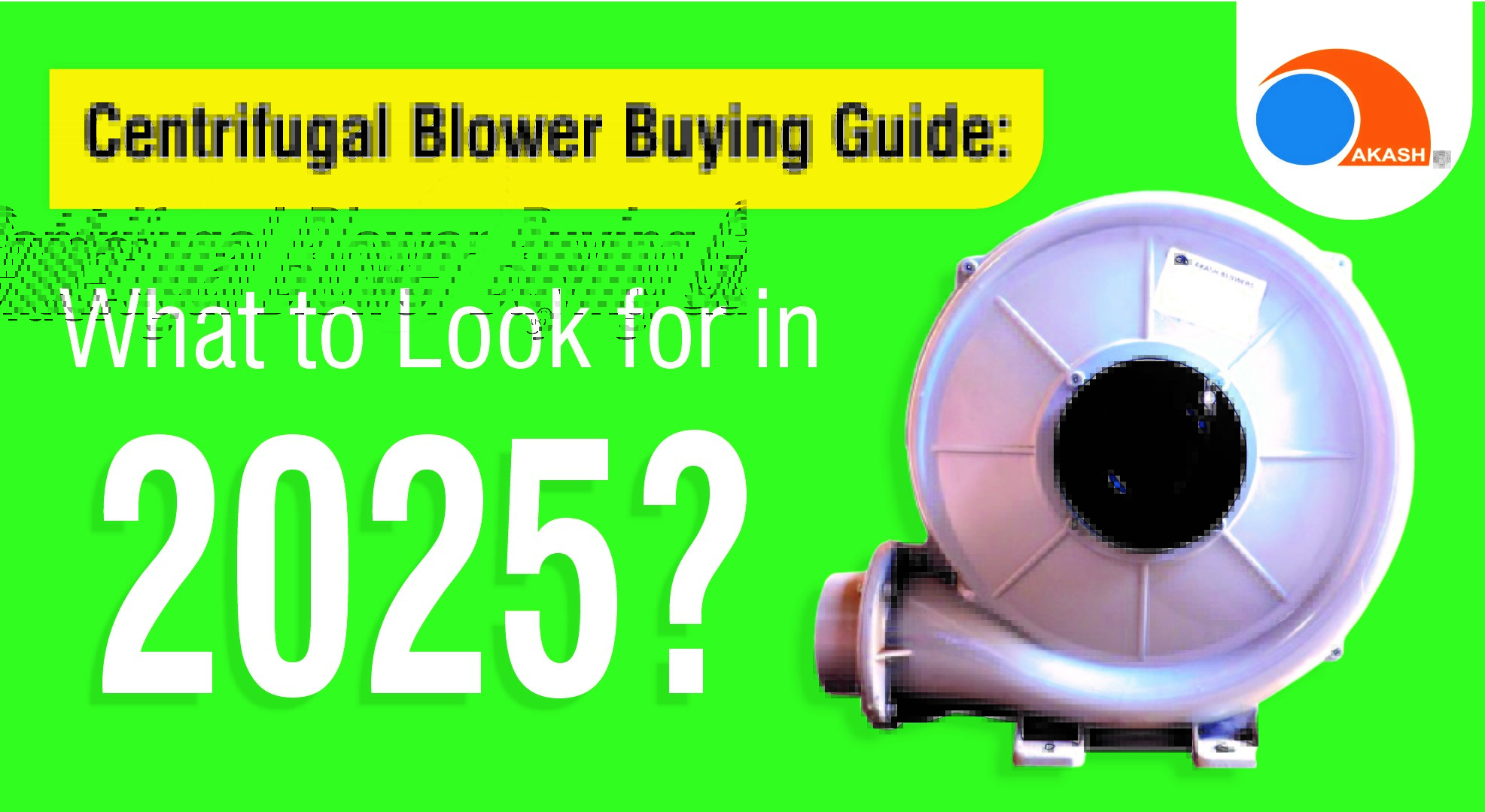
Centrifugal blowers, often called radial blowers, are vital for industries needing high-pressure airflow for ventilation, material handling, or combustion. Unlike Roots blowers, which deliver constant volume, centrifugal blowers excel at moving air against resistance, making them ideal for diverse applications in 2025. With technology advancing and industries prioritizing efficiency, selecting the right centrifugal blower can be overwhelming. This buying guide breaks down the key factors to consider—capacity, pressure, materials, efficiency, and more—while offering insights into industry-specific needs. Whether you’re in manufacturing, HVAC, or power generation, here’s what to look for when buying a centrifugal blower in 2025.
Understanding Centrifugal Blowers
Centrifugal blowers work by drawing air into a rotating impeller, which accelerates it outward via centrifugal force, increasing pressure and velocity. They’re prized for their ability to handle high static pressure (up to 2 bar) and variable airflow (50–50,000 m³/hr), unlike the fixed-volume output of Roots blowers. In 2025, advancements like variable frequency drives (VFDs) and smart controls make them more versatile than ever. But with so many options, how do you choose the right one? Let’s dive in.
Key Factors to Consider When Buying a Centrifugal Blower
1. Capacity and Airflow Requirements
Capacity, measured in m³/hr or CFM, determines how much air the blower moves. Match this to your application:
- Small Scale: 50–500 m³/hr for lab ventilation or small drying systems.
- Medium Scale: 500–5000 m³/hr for industrial drying or dust collection.
- Large Scale: 5000–50,000 m³/hr for power plant combustion or large HVAC.
Calculate your needs based on system volume or process demand. For example, a 1000 m² factory needing ventilation might require 10,000 m³/hr, factoring in air changes per hour (ACH).
2. Pressure Capabilities
Pressure, measured in bars or Pascals, indicates the blower’s ability to overcome resistance from ducts, filters, or materials. Consider:
- Low Pressure (0.1–0.5 bar): HVAC or light ventilation.
- Medium Pressure (0.5–1.0 bar): Dust extraction or pneumatic conveying.
- High Pressure (1.0–2.0 bar): Combustion air or heavy material handling.
A textile plant drying fabric might need 0.8 bar, while a boiler system could demand 1.5 bar. Check your system’s total pressure drop to ensure compatibility.
3. Material and Build Quality
The blower’s construction affects durability and suitability:
- Cast Iron: Affordable, durable for general use.
- Stainless Steel: Corrosion-resistant for chemicals or food processing.
- Aluminum: Lightweight for portable units.
In 2025, look for blowers with reinforced impellers and sealed bearings (e.g., SKF) to handle harsh conditions. For a chemical plant, stainless steel is non-negotiable to resist corrosive gases.
4. Energy Efficiency
With energy costs rising, efficiency is critical. Look for:
- VFDs: Adjust speed to match demand, saving 20–40% on power.
- High-Efficiency Motors: IE3 or IE4 ratings reduce consumption.
- Aerodynamic Design: Backward-curved impellers offer up to 85% efficiency.
A 50 kW blower with VFD could save thousands annually over a fixed-speed model in continuous use.
5. Noise Levels
Centrifugal blowers can be noisy (80–110 dB). In 2025, prioritize:
- Silencers: Reduce noise by 10–20 dB.
- Enclosures: Acoustic hoods for sensitive environments.
- Impeller Type: Backward-inclined designs are quieter than radial ones.
A food processing unit might need a 75 dB blower to meet workplace standards.
6. Maintenance and Serviceability
Downtime costs money. Choose blowers with:
- Easy Access: Removable panels for impeller cleaning.
- Long-Life Components: Bearings lasting 50,000+ hours.
- Local Support: Fast service response (e.g., 24–72 hours).
Akash Blowers, for instance, offers PAN-India service within 48 hours, a boon for urgent repairs.
7. Smart Features in 2025
Modern blowers come with tech upgrades:
- IoT Monitoring: Track vibration, temperature, and airflow remotely.
- Predictive Maintenance: Alerts for wear before failure.
- Automation: Integrate with PLC systems for seamless operation.
A smart blower in a power plant could prevent outages by flagging issues early.
Industry-Wise Applications and Considerations
Centrifugal blowers serve a wide range of industries in 2025. Here’s how to tailor your choice:
- HVAC and Ventilation
- Need: 1000–20,000 m³/hr at 0.2–0.5 bar for air circulation.
- Look For: Quiet operation (70–80 dB), energy-efficient motors.
- Example: A mall in Delhi uses a 15,000 m³/hr blower for climate control.
- Manufacturing (Dust Collection)
- Need: 500–10,000 m³/hr at 0.5–1.0 bar to remove particulates.
- Look For: Robust build, high-pressure capability.
- Example: A steel plant in Jamshedpur relies on a 7000 m³/hr unit.
- Power Generation
- Need: 2000–30,000 m³/hr at 1.0–2.0 bar for combustion air.
- Look For: High durability, smart controls.
- Example: A Punjab coal plant uses a 25,000 m³/hr blower.
- Food Processing
- Need: 500–5000 m³/hr at 0.3–0.8 bar for drying or conveying.
- Look For: Stainless steel, low noise.
- Example: A Tamil Nadu spice factory opts for a 3000 m³/hr unit.
- Chemical Industry
- Need: 1000–15,000 m³/hr at 0.5–1.5 bar for gas handling.
- Look For: Corrosion resistance, sealed construction.
- Example: A Gujarat plant uses a 10,000 m³/hr stainless blower.
- Wastewater Treatment
- Need: 1000–10,000 m³/hr at 0.4–0.8 bar for aeration.
- Look For: Efficiency, continuous duty rating.
- Example: A Mumbai facility runs a 6000 m³/hr blower.
Specification Table: Typical Centrifugal Blower Options in 2025
Parameter | Low Capacity | Medium Capacity | High Capacity |
|---|---|---|---|
Flow Rate (m³/hr) | 50–500 | 500–5000 | 5000–50,000 |
Pressure (bar) | 0.1–0.5 | 0.5–1.0 | 1.0–2.0 |
Power (kW) | 1–5 | 5–50 | 50–200 |
Material | Aluminum/Cast Iron | Cast Iron/SS | Stainless Steel |
Noise Level (dB) | 70–85 | 80–95 | 90–110 |
Efficiency (%) | 70–80 | 75–85 | 80–90 |
Applications | HVAC, Small Drying | Dust Collection, Food | Power, Chemical |
Features | VFD Optional | VFD, Silencer | IoT, High Durability |
How to Choose the Right Supplier in 2025
A blower is only as good as its maker. Look for:
- Reputation: Over 3700 companies trust Akash Blowers for quality.
- Customization: Tailored solutions for unique needs.
- Support: Fast delivery (24-48 hours) and service (24-72 hours).
- Certifications: ISO 9001:2015 for reliability.
Akash Blowers, based in Haryana, offers a range of centrifugal blowers built for 2025’s demands. Explore their options at Akash Blowers to find the perfect fit.
Practical Buying Tips
- Assess Your System: Measure airflow, pressure, and resistance.
- Future-Proof: Add a 10–20% capacity buffer for growth.
- Test Performance: Request a demo or performance curve.
- Compare Costs: Balance upfront price with energy savings.
- Ask Questions: Does it handle your material? What’s the warranty?
For example, a textile firm choosing a 4000 m³/hr blower with VFD over a 5000 m³/hr fixed-speed model saved 25% on power in year one.
Why 2025 Matters
In 2025, sustainability and smart tech drive blower design. Stricter emissions rules push for efficient motors, while IoT integration cuts maintenance costs. Companies like Akash Blowers lead the charge, offering blowers that meet these trends head-on. Visit Akash Blowers for solutions that align with 2025’s industrial landscape.
Conclusion
Buying a centrifugal blower in 2025 means balancing capacity, pressure, efficiency, and durability with your industry’s needs. From HVAC to chemical processing, the right blower boosts performance and cuts costs. Use this guide—complete with specs and industry insights—to make an informed choice. For top-tier options and expert advice, check out Akash Blowers—a trusted name powering industries into the future.
Also Read
How to Reduce Sludge Management Costs with Screw Press Technology
How Roots Blowers are Used in Cement Plants: A Complete Guide
How to Select the Right Capacity Roots Blower for Your Industry?
Join Our WhatsApp Channel for Latest Blowers Industry Updates