

Aeration Blower
Our Product Range
Explore our engineered solutions designed to meet the toughest industrial demands.
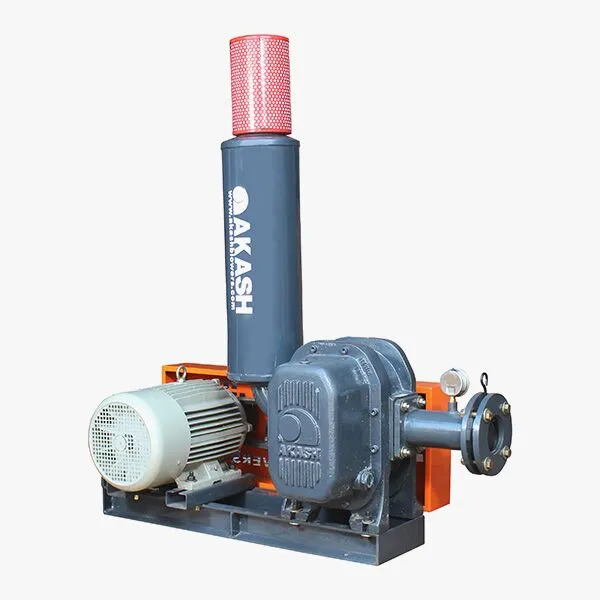
Twin Lobe Roots Blowers
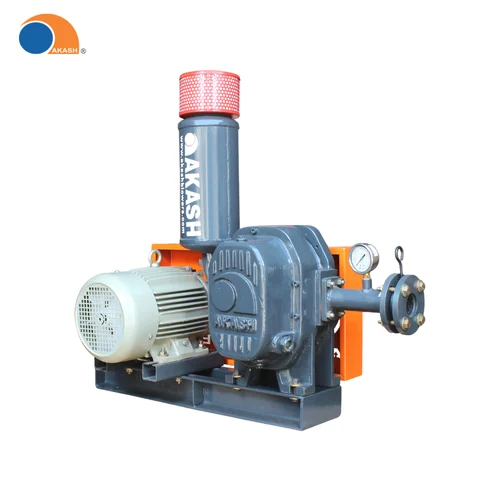
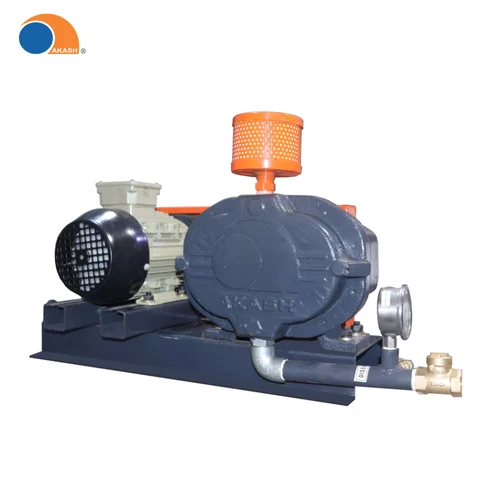
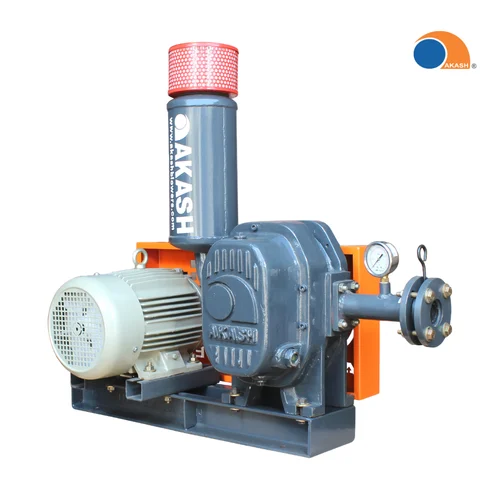
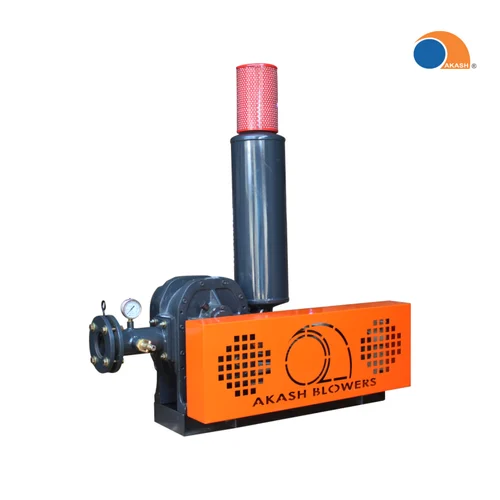
Twin Lobe Roots Blowers are highly reliable and durable positive displacement units, whose pumping capacity is determined by size, operating speed, and pressure conditions.
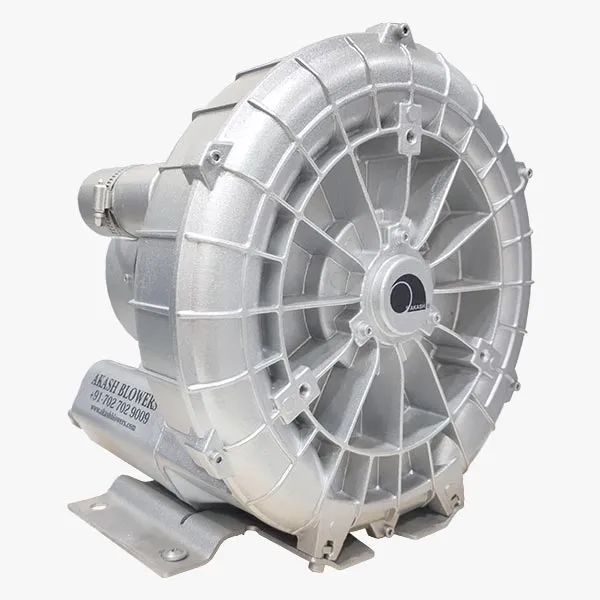
Ring/Side Channel Blowers
Ring/Side Channel Blowers feature spiral airflow, multiple air compression, and pulsation-free delivery, ensuring reliable, efficient, and high-performance industrial air supply.
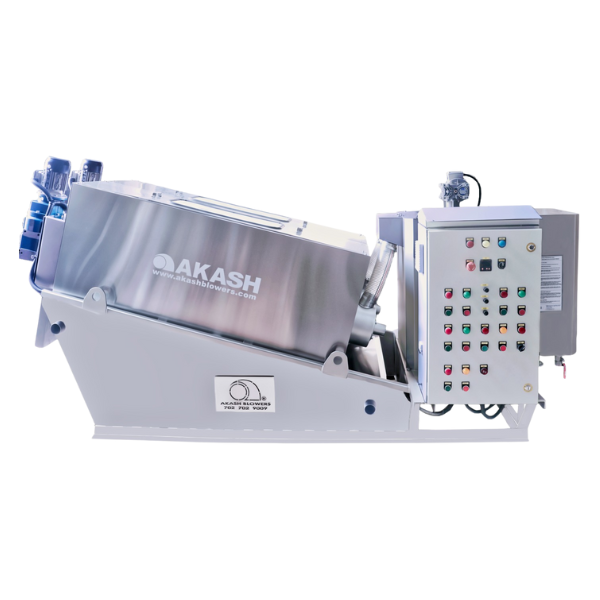
Sludge Dewatering Machine
AKASH Sludge Dewatering Machines separate solids from liquids, reducing sludge volume, lowering costs, and ensuring reliable wastewater management for industries.
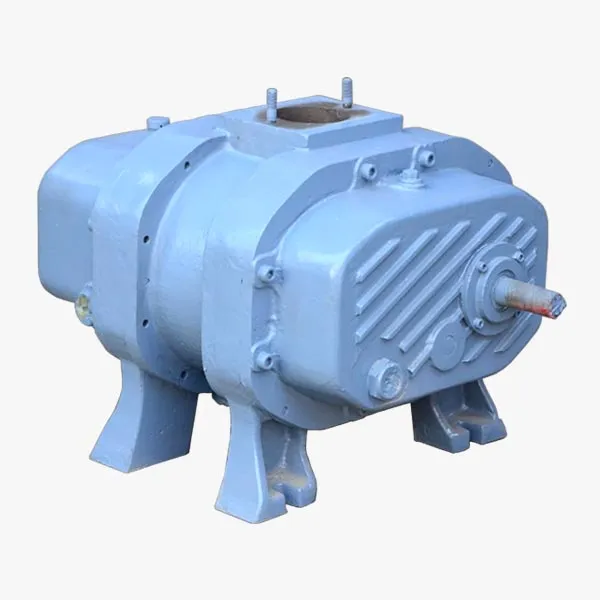
Gas Blowers
Gas Blowers are highly reliable positive displacement units designed to handle various industrial gases, with performance depending on size, speed, and pressure conditions.
overview
Aeration Blower: Complete Guide for Efficient Wastewater Treatment
An aeration blower is one of the most important components in modern wastewater treatment systems. It supplies continuous air to aeration tanks, supporting the microorganisms that break down organic pollutants. From sewage treatment plants and effluent treatment plants to industrial and aquaculture applications, reliable aeration is essential for maintaining effective biological treatment.
Choosing the right blower for aeration tank applications requires more than checking airflow capacity. Pressure, oxygen demand, tank depth, diffuser resistance, operating hours, energy efficiency, and future expansion must all be considered. The right system can improve treatment performance, process stability, equipment life, and operational efficiency.
For businesses searching for dependable aeration blower manufacturers, Akash Blowers offers application-focused blower solutions designed around industrial operating requirements. This guide explains how aeration blowers work, their types, applications, benefits, selection criteria, maintenance, challenges, and future trends.
What Is an Aeration Blower?
An aeration blower is mechanical equipment that draws atmospheric air and delivers it into wastewater at the required flow and pressure. The air is transported through pipelines and released into an aeration tank through diffusers.
Inside the tank, the diffusers create air bubbles. As these bubbles move through the wastewater, oxygen transfers into the liquid. Microorganisms use this dissolved oxygen to break down biodegradable organic matter.
The blower therefore plays a direct role in maintaining the biological activity required for wastewater treatment.
A properly designed air blower for aeration tank applications must generate enough pressure to overcome water depth, diffuser resistance, pipeline losses, valves, and other system restrictions. At the same time, it should provide airflow that matches the actual oxygen demand of the treatment process.
Why Aeration Is Important in Wastewater Treatment
Biological treatment depends on microorganisms that require oxygen to function effectively. If oxygen levels fall too low, microbial activity can decrease and treatment efficiency may suffer.
Insufficient aeration can contribute to poor organic matter removal, unstable biological conditions, unpleasant odors, and inconsistent treated-water quality.
However, excessive aeration is not ideal either. Continuously supplying more air than the process requires can increase energy consumption without providing proportional treatment benefits.
The goal is balanced aeration. The blower should provide the required amount of air while maintaining suitable dissolved oxygen conditions.
How Does an Aeration Blower Work?
The operating principle depends on the blower technology, but the overall process is straightforward.
First, atmospheric air enters the blower through an inlet filter. The blower then compresses or pressurizes the air before sending it into the discharge pipeline. The air travels through a header and is distributed to different sections of the aeration tank.
Diffusers at the bottom of the tank release the air into the wastewater. Smaller bubbles generally provide greater surface area for oxygen transfer, allowing oxygen to move from the air into the liquid.
The microorganisms then consume the dissolved oxygen while converting biodegradable pollutants into simpler compounds, biomass, carbon dioxide, and water.
For this process to work efficiently, the complete aeration system must be properly designed. The blower, pipeline, valves, diffusers, controls, and monitoring equipment all influence final performance.
Types of Aeration Blowers
Different applications require different blower technologies. Selection depends on airflow, pressure, operating conditions, control requirements, and plant capacity.
Rotary Lobe Blowers
Rotary lobe blowers are widely used in wastewater treatment because of their robust construction and straightforward operating principle. Rotating lobes move air from the inlet to the discharge side.
They are suitable for many STP and ETP applications where consistent airflow is required. They can also be installed as multiple units to provide operating flexibility and standby capacity.
Screw Blowers
Screw blowers use rotating screw elements to compress air. They are often considered where energy efficiency, smooth operation, compact design, and variable airflow are important.
They can be particularly useful for plants where oxygen demand changes throughout the day.
Centrifugal Blowers
Centrifugal blowers use an impeller to increase air velocity and generate pressure. They are generally suitable for applications requiring high air volumes.
Their performance depends strongly on the system operating point, so proper engineering is essential before installation.
Turbo Blowers
Turbo blowers use high-speed rotating technology to provide efficient air delivery. They are increasingly considered for larger wastewater treatment facilities where energy optimization and automated control are priorities.
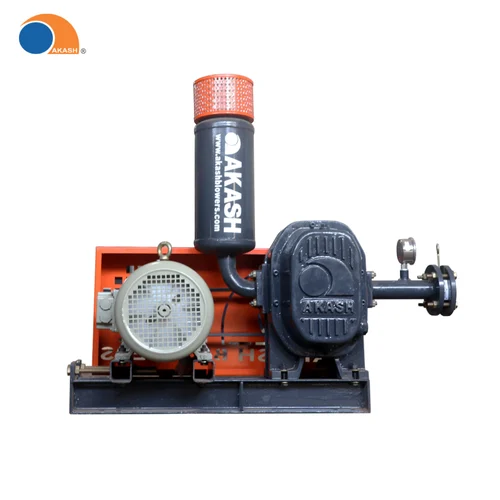
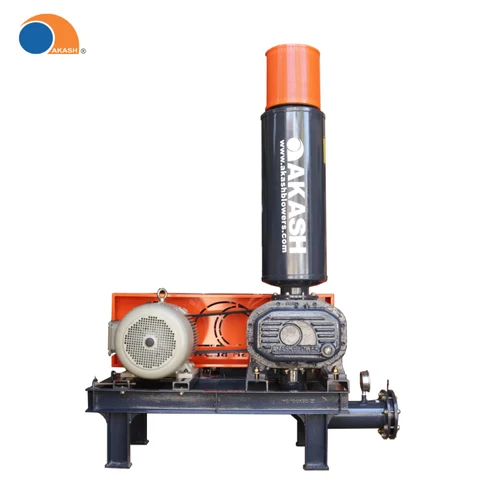
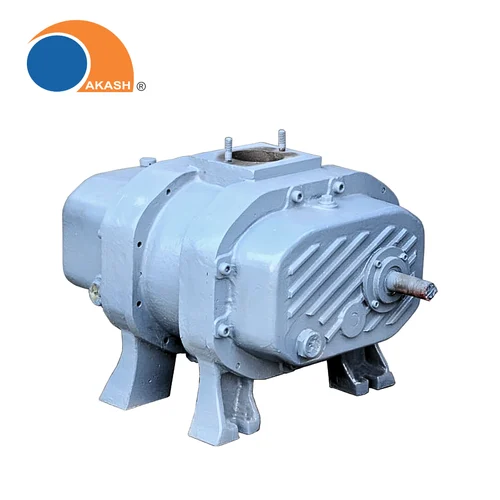
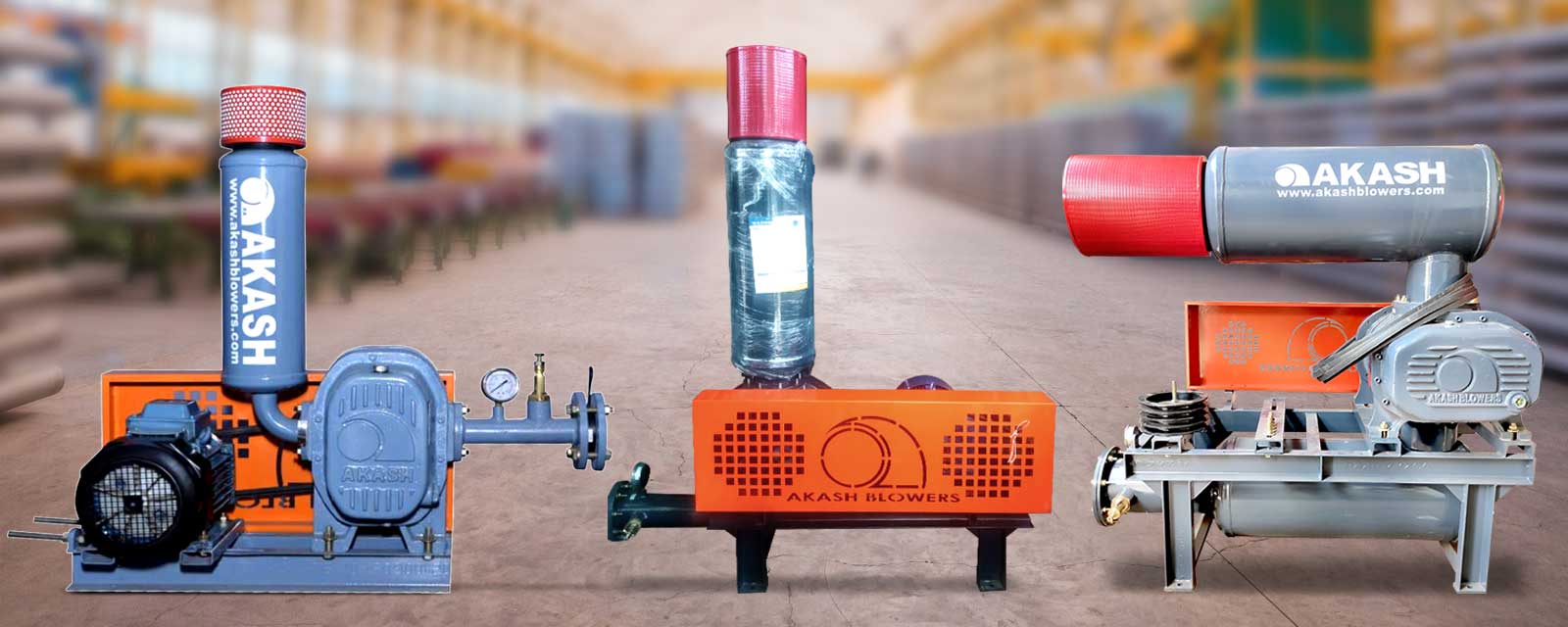
Our Roots Blowers
Applications of Aeration Blowers
An aeration blower can be used across several industries and treatment processes.
Sewage Treatment Plants
An STP aeration blower supplies oxygen to biological treatment tanks. Municipal sewage loads can change throughout the day, making airflow control and reliable operation important.
Multiple blowers can be installed to provide redundancy and allow the plant to operate efficiently under different loading conditions.
Effluent Treatment Plants
Industrial ETPs often treat wastewater containing biodegradable organic compounds. Industries such as food processing, pharmaceuticals, textiles, chemicals, and manufacturing may use aeration systems as part of biological treatment.
The blower should be selected according to the specific process requirements rather than using a standard configuration for every industry.
Food and Beverage Processing
Food and beverage wastewater can have a high biodegradable load. Biological treatment therefore requires adequate oxygen availability.
A properly selected blower for aeration tank applications can support stable microbial activity and consistent treatment performance.
Aquaculture
Aeration equipment is also used in aquaculture to maintain oxygen levels in water. Fish and other aquatic organisms depend on adequate dissolved oxygen for healthy growth.
Although aquaculture has different operating requirements from wastewater treatment, reliable air delivery remains essential.
Benefits of Using a Quality Aeration Blower
A properly selected blower can provide several operational benefits.
Improved biological treatment: Adequate oxygen supports microorganisms and helps biological systems break down organic pollutants effectively.
Better process stability: Controlled airflow helps maintain suitable dissolved oxygen levels and supports consistent biological activity.
Operational reliability: Treatment facilities often operate continuously, so dependable blower operation helps reduce process interruptions.
Energy optimization: Aeration can be a significant energy-consuming process. Efficient blower selection and intelligent control can reduce unnecessary energy use.
Scalability: Multiple blower configurations can allow plants to increase or decrease operating capacity according to actual demand.
Long-term performance: Correct sizing, proper installation, and preventive maintenance can improve equipment reliability and service life.
How to Select a Blower for Aeration Tank
Selecting a blower for aeration tank applications requires accurate process information.
Airflow Requirement
The required airflow should be calculated based on oxygen demand. Factors such as wastewater flow, organic loading, biological process design, temperature, biomass concentration, and oxygen transfer efficiency should be evaluated.
Oversizing can result in unnecessary energy consumption, while undersizing may cause insufficient oxygen availability.
Discharge Pressure
Pressure must account for tank depth, diffuser resistance, pipeline losses, valves, fittings, and other restrictions.
A blower should be selected according to the actual system operating point rather than airflow alone.
Operating Schedule
Continuous-duty applications require equipment capable of reliable long-term operation. The expected operating schedule should therefore be considered during selection.
Redundancy
Plants where treatment continuity is critical should consider standby capacity. Multiple blower arrangements can provide backup while also improving airflow flexibility.
Control Requirements
Modern systems can use dissolved oxygen sensors and variable-speed drives to adjust blower output according to process demand. This can improve efficiency compared with fixed-output operation.
Aeration Blower vs Other Air Supply Options
| Feature | Rotary Lobe | Screw Blower | Centrifugal Blower |
|---|---|---|---|
|
Airflow Control |
Good |
Very good |
Good |
|
Continuous Operation |
Excellent |
Excellent |
Excellent |
|
Variable Demand |
Moderate |
Very good |
Good |
|
Scalability |
High |
High |
Excellent |
|
Maintenance |
Straightforward |
Specialized |
Specialized |
|
Automation |
Good |
Excellent |
Good |
|
Application Range |
Broad |
Broad |
High-volume systems |
Aeration Blower Price and Total Value
Businesses researching aeration blower price should consider more than the initial purchase decision.
The overall value of a blower depends on energy efficiency, maintenance requirements, reliability, controls, serviceability, operating life, and suitability for the application.
An inexpensive but poorly matched blower may result in higher energy consumption or frequent maintenance. A properly engineered solution can offer better long-term value through stable performance and efficient operation.
Therefore, buyers should evaluate lifecycle performance rather than focusing only on initial equipment considerations.
Common Aeration Blower Problems
Even a high-quality blower can perform poorly if the complete aeration system is not maintained.
One common problem is high energy consumption. This may occur because of clogged diffusers, excessive pressure losses, incorrect blower selection, or poor system design.
Insufficient airflow can result from blocked inlet filters, leaks, damaged components, or excessive system resistance.
Excessive vibration or noise may indicate bearing problems, misalignment, loose components, or foundation issues.
Diffuser fouling can increase system resistance and force the blower to operate at higher pressure.
Another issue is over-aeration. Operating blowers continuously at maximum output can waste energy when oxygen demand is lower.
Maintenance Best Practices
Regular maintenance is essential for reliable aeration.
Air filters should be inspected and cleaned or replaced according to operating conditions. Bearings, lubrication systems, belts, valves, and other components should be checked according to the manufacturer’s recommendations.
Operators should monitor pressure, airflow, temperature, vibration, and noise. Any unusual change should be investigated early.
The aeration system should also be inspected regularly. Damaged pipelines, leaking connections, and blocked diffusers can reduce overall efficiency even when the blower itself is functioning correctly.
Preventive maintenance is generally more effective than waiting for a major failure.
Improving Aeration System Efficiency
Efficiency begins with correct system design.
The first step is determining actual oxygen requirements. The next step is minimizing unnecessary pressure losses through properly designed pipelines, valves, and diffusers.
Dissolved oxygen monitoring can further improve performance. When combined with variable-speed control, the blower can adjust airflow according to actual biological demand.
Multiple blower configurations can also provide better flexibility. During low-load periods, fewer units can operate, while additional capacity can be introduced when oxygen demand increases.
Latest Trends in Aeration Blower Technology
Modern wastewater treatment is increasingly focused on energy optimization and automation.
High-efficiency blower technologies are becoming more attractive because aeration can represent a significant portion of plant energy consumption.
Variable-speed operation allows airflow to change according to process requirements. Dissolved oxygen sensors provide real-time information, while automated controls can adjust blower operation accordingly.
Digital monitoring is another growing trend. Operators can monitor pressure, temperature, vibration, airflow, and operating status to identify potential problems before they cause major downtime.
Future systems are expected to become even more intelligent, with advanced analytics helping predict oxygen demand and equipment maintenance requirements.
Why Choose Akash Blowers?
Selecting the right aeration blower manufacturers is important because blower performance depends heavily on correct engineering and application knowledge.
Akash Blowers focuses on blower solutions designed around practical industrial requirements. Each application can have different airflow, pressure, operating, and installation conditions, so equipment selection should be based on the actual requirements of the treatment process.
For STPs, ETPs, industrial facilities, and other aeration applications, an application-focused approach can help businesses select suitable equipment while considering reliability, efficiency, scalability, and maintenance.
Akash Blowers can support businesses looking for dependable blower solutions designed for demanding operating environments.
Conclusion
An aeration blower is a critical part of biological wastewater treatment. It supplies the oxygen required by microorganisms and helps maintain stable treatment conditions.
From an STP aeration blower to an industrial air blower for aeration tank, the correct equipment must be selected according to airflow, pressure, oxygen demand, tank depth, diffuser resistance, operating schedule, and future requirements.
Businesses should also consider energy efficiency, automation, redundancy, maintenance, and long-term reliability when choosing a blower.
If you are planning a new treatment plant or upgrading an existing aeration system, choosing the right blower can significantly improve operational efficiency and process reliability. Explore Akash Blowers’ aeration solutions and take the next step toward a more efficient, scalable, and dependable wastewater treatment system.
Frequaently Asked Question
An aeration blower is a mechanical device used to supply air continuously to wastewater treatment tanks. It provides the oxygen required by microorganisms for biological treatment and helps maintain suitable dissolved oxygen levels.
The main function of an aeration blower is to deliver air at the required flow and pressure to an aeration tank. This air supports microorganisms that break down biodegradable organic matter in wastewater.
A blower for aeration tank applications supplies compressed or pressurized air through pipelines and diffusers installed inside the tank. The diffusers release air into the wastewater, allowing oxygen to transfer into the liquid.
An STP aeration blower is used in sewage treatment plants to provide oxygen for biological treatment. It supports microbial activity and helps maintain stable conditions in the aeration process.
An aeration blower draws atmospheric air through an inlet and increases its pressure before sending it through an air distribution system. The air reaches diffusers inside the aeration tank, where it is released as bubbles and transfers oxygen into the wastewater.
There is no single blower type that is best for every application. Rotary lobe, screw, centrifugal, and turbo blowers can all be suitable depending on airflow, pressure, tank depth, operating hours, oxygen demand, and process requirements.
When selecting an air blower for aeration tank, consider required airflow, discharge pressure, tank depth, diffuser resistance, wastewater characteristics, operating schedule, and future expansion requirements. Correct system-level sizing is essential for efficient operation.
Oxygen supports aerobic microorganisms responsible for breaking down organic pollutants. Maintaining suitable dissolved oxygen conditions helps biological treatment remain stable and effective.
An undersized blower may not supply sufficient air to meet the biological oxygen demand. This can result in low dissolved oxygen, reduced microbial activity, unstable treatment performance, and poor effluent quality.
An oversized aeration blower may supply more air than the process requires. This can increase energy consumption and may make process control more difficult. Proper sizing based on actual oxygen demand is therefore important.
Aeration blower price can depend on the blower technology, airflow capacity, pressure requirements, motor configuration, control system, construction, accessories, and application specifications. Long-term energy efficiency and maintenance requirements should also be considered when evaluating overall value.
Yes. Many aeration blowers are designed for continuous-duty operation. However, proper installation, ventilation, lubrication, cooling, monitoring, and preventive maintenance are important for reliable continuous operation.
Energy consumption can be optimized by selecting the correct blower size, maintaining clean diffusers, reducing pipeline pressure losses, using efficient blower technology, and controlling airflow according to actual oxygen demand. Dissolved oxygen sensors and variable-speed drives can further improve efficiency.
Low airflow can be caused by a blocked inlet filter, pipeline leakage, diffuser fouling, incorrect operating conditions, mechanical wear, valve problems, or excessive system resistance. The complete air distribution system should be inspected before identifying the blower as the sole cause.
Excessive noise or vibration may indicate misalignment, worn bearings, loose components, improper foundation conditions, mechanical imbalance, or other operating problems. Early inspection can help prevent more serious equipment damage.
Maintenance frequency depends on blower design, operating hours, environmental conditions, and manufacturer recommendations. Regular inspection of filters, lubrication, bearings, belts, temperature, pressure, vibration, and airflow can help maintain reliable performance.
Yes, a properly designed air distribution system can supply multiple aeration tanks from a common blower arrangement. However, pipeline sizing, pressure losses, control valves, airflow requirements, and independent tank requirements must be carefully considered.
Multiple blowers provide operational flexibility and redundancy. Different combinations of blowers can operate according to the current oxygen demand, while standby capacity can help maintain treatment operations if one unit requires maintenance.
The blower supplies pressurized air through the pipeline network to diffusers located inside the aeration tank. The diffusers break the air into bubbles, increasing the contact area between air and wastewater and supporting oxygen transfer.
Akash Blowers focuses on blower solutions designed around application requirements. For wastewater and industrial aeration systems, factors such as airflow, pressure, operating conditions, reliability, efficiency, and scalability should be considered together. Choosing an experienced aeration blower manufacturer can help ensure that the selected system is appropriate for the intended application and long-term operation.
What Our Clients Say About Us

RATHOD VIJAY
4 months ago
- List Item #1
- List Item #1
- List Item #1
- List Item #1
- List Item #1
Verified Purchase
Akash Blowers service always excellent, deliveries always on time, staff highly technical and cooperative. Industrial Roots Blower performance great.

Jayesh Pangam
3 months ago
- List Item #1
- List Item #1
- List Item #1
- List Item #1
- List Item #1
Verified Purchase
Product quality very good and after-sales support also reliable. With 100% spare parts available, their Ring Blowers service makes the team more dependable.

Arvind Raut
3 months ago
- List Item #1
- List Item #1
- List Item #1
- List Item #1
- List Item #1
Verified Purchase
Akash Blowers Pvt Ltd makes quality Air Blowers; with 5 years of support their service stays prompt and cost-effective. Roots Blower performance always reliable.

Akshara m
4 months ago
- List Item #1
- List Item #1
- List Item #1
- List Item #1
- List Item #1
Verified Purchase
Best and timely service providers offering quick support and smooth coordination, delivering dependable Water Treatment Blower solutions for every requirement.
Aparna S
3 months ago
- List Item #1
- List Item #1
- List Item #1
- List Item #1
- List Item #1
Verified Purchase
Good staff service, quick quotes, and efficient Roots Blower performance. Client fully satisfied and issues resolved instantly. Well done Akash Blowers.

Anuj Sharma
3 months ago
- List Item #1
- List Item #1
- List Item #1
- List Item #1
- List Item #1
Verified Purchase
Good experience with Akash Products. Best service, on-time delivery and friendly staff. A trusted choice for Twin Lobe Roots Blower users.

Himmat Singh
Month ago
- List Item #1
- List Item #1
- List Item #1
- List Item #1
- List Item #1
Verified Purchase
Product quality very good, sales and service staff helpful, spare parts easy to get, and their Ring Blower support remains reliable and smooth.

Amit Yadav Yadav
3 years ago
- List Item #1
- List Item #1
- List Item #1
- List Item #1
- List Item #1
Verified Purchase
We’re associated for 5 years; models like AB-305, AB-44, AB-52 work great. Support is reliable, especially in Industrial Roots Blower solutions.

Divyanshu pandey
2 months ago
- List Item #1
- List Item #1
- List Item #1
- List Item #1
- List Item #1
Verified Purchase
I like all the work of this company. Very best 👍🏻 Best quality material and reliable Air Blower and Roots Blower products.

UNISTAR AQUATECH
2 months ago
- List Item #1
- List Item #1
- List Item #1
- List Item #1
- List Item #1
Verified Purchase
Very good experience with Akash Blower Company. Supportive team and quick response. Trusted for Water Treatment Blower solutions.

Dhanashree Jadhav
3 months ago
- List Item #1
- List Item #1
- List Item #1
- List Item #1
- List Item #1
Verified Purchase
Very nice service provided by Akash Blowers team. Reliable support for Ring Blower and other Industrial Roots Blower needs.

Pardeep Kumar
3 years ago
- List Item #1
- List Item #1
- List Item #1
- List Item #1
- List Item #1
Verified Purchase
Such a wonderful company to buy Ring Blower. Purchased 1 year ago, still works perfectly. Fully satisfied with Roots Blower support.

Sumeet bansal
2 months ago
- List Item #1
- List Item #1
- List Item #1
- List Item #1
- List Item #1
Verified Purchase
Their products and service are very good. Trusted for high-quality Air Blower and reliable Twin Lobe Roots Blower solutions.

Ewaltz works
9 months ago
- List Item #1
- List Item #1
- List Item #1
- List Item #1
- List Item #1
Verified Purchase
Akesh Blowers provides best on-time service and delivery. Technical, cooperative staff. Ideal for Roots Air Blower, Screw Press, and spares.

Saumyaranjan Nayak
10 months ago
- List Item #1
- List Item #1
- List Item #1
- List Item #1
- List Item #1
Verified Purchase
Best on-time service and delivery within 24–48 hours. Friendly, cooperative staff. Ideal for Roots Blower and Industrial Air Blower needs.

Account Amitaqua
3 months ago
- List Item #1
- List Item #1
- List Item #1
- List Item #1
- List Item #1
Verified Purchase
Good experience with Akash Products; their service is reliable, and both Air Blower and Roots Blower solutions deliver consistent high quality.

Mohit Kumar
2 months ago
- List Item #1
- List Item #1
- List Item #1
- List Item #1
- List Item #1
Verified Purchase
Good product and excellent service. Trusted for reliable Air Blower and high-quality Twin Lobe Roots Blower solutions.

Kishan Bhagat
11 months ago
- List Item #1
- List Item #1
- List Item #1
- List Item #1
- List Item #1
Verified Purchase
Company bahut achi hai. Staff bhi bahut acha hai. 3 saal se koi problem nahi hui. First-class service for Ring Blower & Roots Blower.

Harsh Sharma
10 months ago
- List Item #1
- List Item #1
- List Item #1
- List Item #1
- List Item #1
Verified Purchase
Good company nd quality of blowers so good nd service bhi too good. Ring Blower and Air Blower products are very reliable.

Sudhish Kumar
10 months ago
- List Item #1
- List Item #1
- List Item #1
- List Item #1
- List Item #1
Verified Purchase
Good experience with Akash Products. Nice design, excellent output as per requirement. Trusted for Roots Blower & Air Blower.
Review Us on Google
Take a moment to review us on Google and let us know how we’re doing. Your feedback helps us improve and continue delivering the best solutions.
Click Hereaeration blower, aeration blower price, blower for aeration tank, aeration blower manufacturers, air blower for aeration tank, stp aeration blower
blower working principle, Roots blower working, how does blower work, what is blower, roots blower working principle, industrial blower working principle
aeration blower, aeration blower price, blower for aeration tank, aeration blower manufacturers, air blower for aeration tank, stp aeration blower