
Lobe Blower
Our Product Range
Explore our engineered solutions designed to meet the toughest industrial demands.
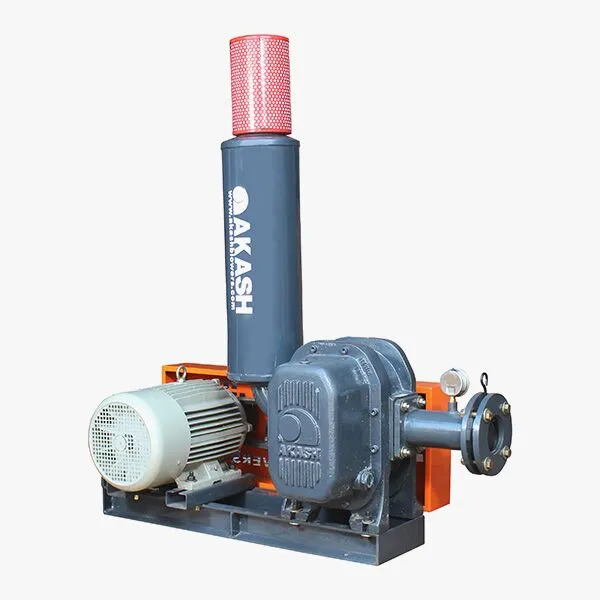
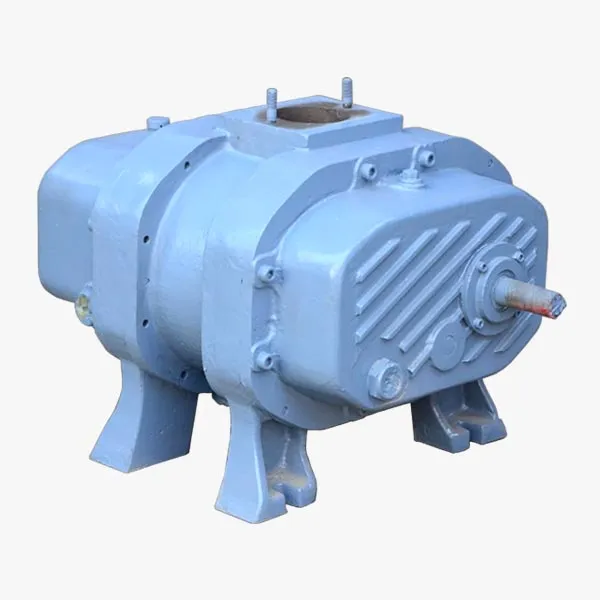
Twin Lobe Roots Blowers
Twin Lobe Roots Blowers are highly reliable and durable positive displacement units, whose pumping capacity is determined by size, operating speed, and pressure conditions.
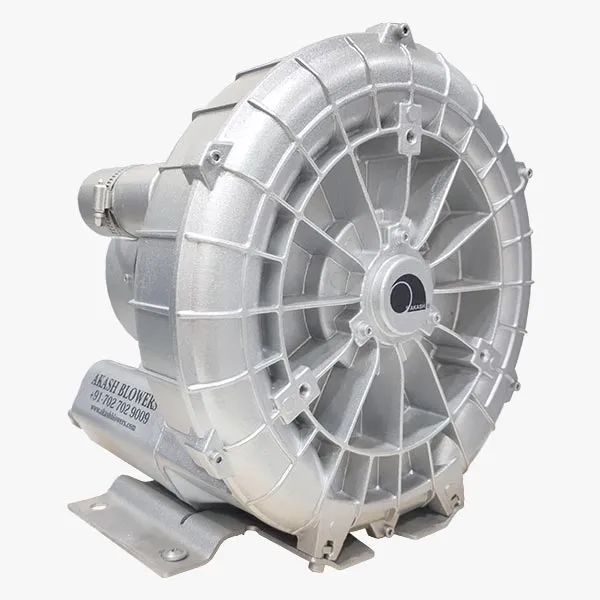
Ring/Side Channel Blowers
Ring/Side Channel Blowers feature spiral airflow, multiple air compression, and pulsation-free delivery, ensuring reliable, efficient, and high-performance industrial air supply.
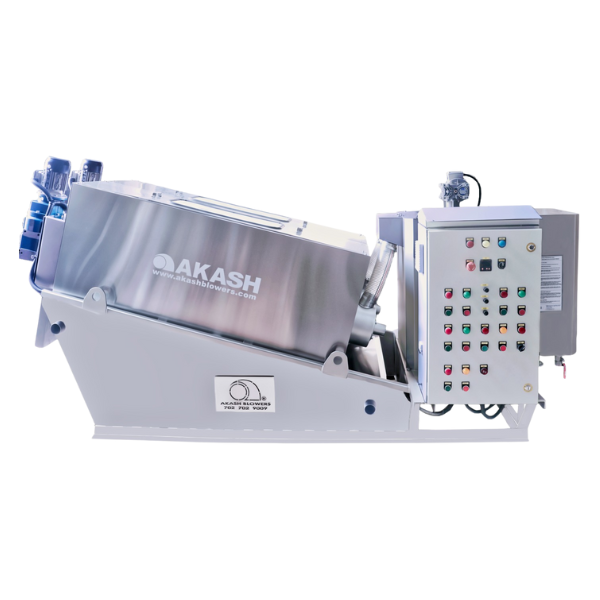
Sludge Dewatering Machine
AKASH Sludge Dewatering Machines separate solids from liquids, reducing sludge volume, lowering costs, and ensuring reliable wastewater management for industries.
Gas Blowers
Gas Blowers are highly reliable positive displacement units designed to handle various industrial gases, with performance depending on size, speed, and pressure conditions.
overview
Lobe Blower: Working Principle, Types, Features, Applications and Selection Guide
A lobe blower is a positive displacement air-moving machine designed to deliver a steady volume of air or gas at a controlled pressure. It is widely used where continuous, oil-free air delivery and dependable operation are required. The basic operating principle involves two specially shaped rotors rotating inside a rigid casing, trapping air and moving it from the inlet toward the outlet.
For buyers, engineers, plant operators, and industrial users, understanding a lobe blower means looking beyond the name of the equipment. Rotor configuration, cooling arrangement, manufacturing accuracy, timing gears, bearing design, volumetric efficiency, and installation requirements all influence how effectively the blower performs.
A roots rotary lobe blower is one of the most commonly recognized designs in this category. Depending on the rotor configuration, equipment may be described as a twin lobe blower or tri lobe blower. Although these terms refer to different rotor arrangements, their purpose is generally to provide controlled movement of air or gas for industrial processes.
What Is a Lobe Blower?
A lobe blower is a positive displacement blower that transfers air by using rotating lobes inside a casing. As the rotors turn, air enters through the inlet, becomes trapped between the rotor and casing surfaces, and is carried toward the discharge side.
Unlike a conventional compressor that continuously reduces the volume of trapped gas to produce compression internally, a rotary lobe design primarily moves a defined volume of air. Pressure is developed as the discharged air encounters resistance from the connected system.
This operating principle makes a lobe blower suitable for applications requiring continuous airflow, consistent operation, and relatively simple mechanical construction.
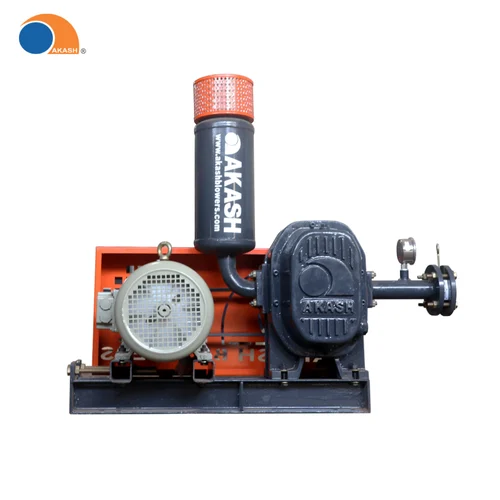
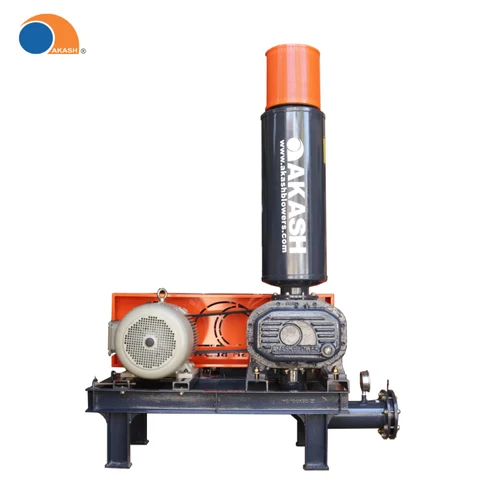
The design can be configured in horizontal or vertical arrangements depending on installation requirements. Air-cooled and water-cooled designs can also be used according to the operating conditions and equipment configuration.
How Does a Lobe Blower Work?
The working principle of a lobe blower is straightforward but depends heavily on accurate rotor timing.
Two rotors rotate in opposite directions inside the blower casing. Timing gears maintain the correct relationship between the rotors so that they rotate without contacting each other.
The basic process is:
- Air enters through the inlet: Rotation creates a space that allows air to enter the blower.
- Air becomes trapped: A controlled volume of air is captured between the rotor lobes and casing.
- Rotors carry the air: The trapped air moves around the casing toward the discharge side.
- Air exits through the outlet: The air is released into the connected piping or process system.
- Continuous rotation maintains flow: As the rotors continue turning, the cycle repeats.
Because rotor timing is critical, a lobe blower uses timing gears to maintain accurate rotor positioning. Hardened and ground alloy steel timing gears with oil-splash lubrication can support precise operation and long-term mechanical performance.
Key Features That Matter in a Lobe Blower
The mechanical construction of a lobe blower has a direct impact on its operating performance. Several engineering features are particularly important when evaluating this type of equipment.
100% Oil-Free Air Delivery
Oil-free air delivery is an important requirement for many industrial processes. A properly designed lobe blower can provide 100% oil-free air delivery, making the technology appropriate for applications where contamination from oil in the delivered air must be avoided.
Hardened and Ground Timing Gears
Timing gears control the relationship between the blower rotors. Alloy steel hardened and ground timing gears provide accurately controlled rotor timing, while oil-splash lubrication supports the gear mechanism.
Anti-Friction Bearings
Anti-friction bearings help support the rotating assembly and contribute to smooth mechanical operation. Proper bearing selection is essential because the rotors must maintain accurate alignment during operation.
Rigid CI Casing and End Plates
A rigid one-piece cast iron casing and end plates provide the structural foundation of the blower. Maintaining dimensional accuracy within the casing is particularly important because the rotor-to-casing relationship affects the machine’s operating characteristics.
Dynamically Balanced Rotor Shaft Assembly
The rotor shaft assembly is dynamically balanced to Grade 6.3 according to ISO 1940-1986. Proper dynamic balancing helps minimize unwanted vibration associated with rotating components.
Large Inlet and Outlet Connections
Large inlet and outlet connections can help minimize flow losses within the blower connections. This is particularly relevant in systems where air movement and pressure losses need to be carefully managed.
Why Manufacturing Accuracy Is Important
A lobe blower depends on precise interaction between its mechanical components. Rotor profiles, casing dimensions, shaft alignment, and gear timing all need to work together accurately.
State-of-the-art imported CNC machines can be used to machine blower components to close tolerances. High accuracy in profile machining helps support high volumetric efficiency.
This is especially important because unnecessary internal clearances, inaccurate rotor profiles, or poor alignment can affect the amount of air moved during each rotation.
The manufacturing process therefore matters just as much as the basic blower concept. A technically sound lobe blower requires accurately manufactured and properly assembled components.
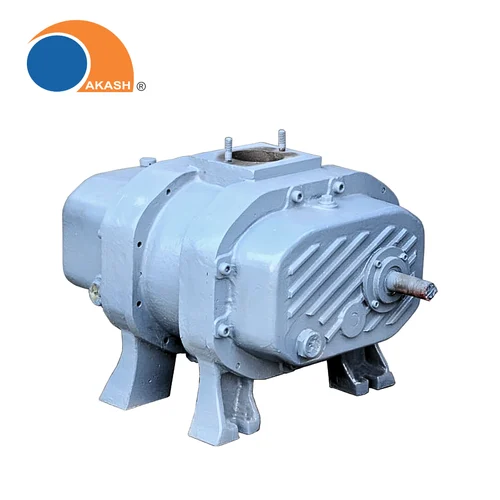
Our Roots Blowers
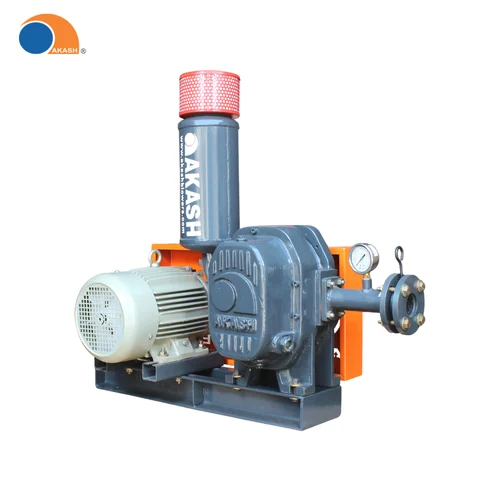
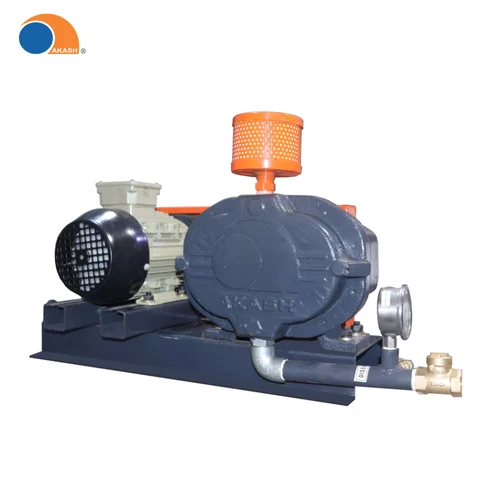
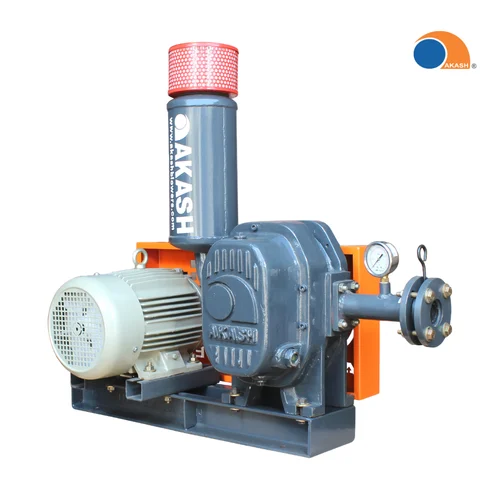
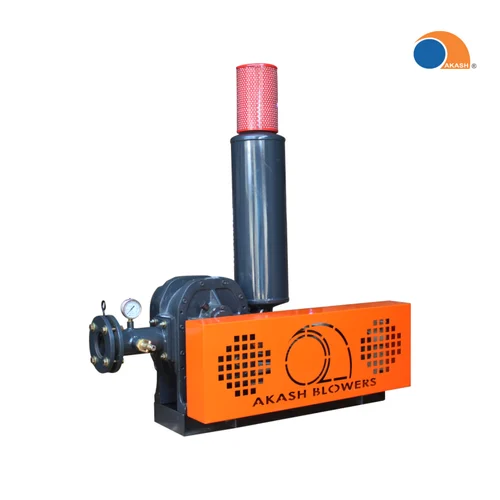
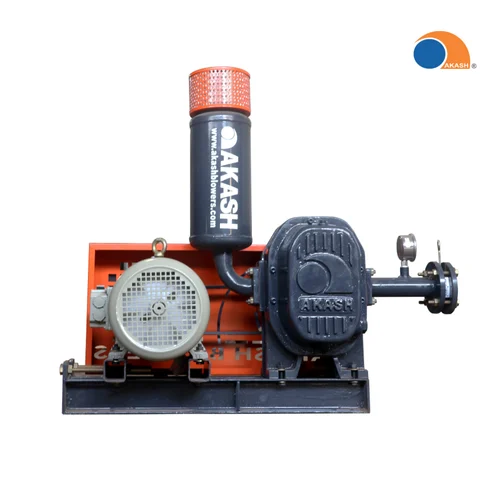
Improved Volumetric Efficiency and Operating Temperature
Volumetric efficiency is an important consideration when evaluating rotary positive displacement equipment. A lobe blower with accurately machined rotor profiles and close manufacturing tolerances can achieve improved volumetric efficiency.
The design can also support reduced operating temperatures when the blower is engineered appropriately for its intended application.
Cooling configuration is another consideration. Depending on the design and operating environment, both air-cooled and water-cooled arrangements can be available.
The appropriate cooling arrangement should be selected based on the actual operating conditions rather than treating one cooling method as universally better.
Where Is a Lobe Blower Used?
The applications of a lobe blower are determined by the requirement for continuous movement of air or gas. Because the technology provides positive displacement airflow, it can be used across various industrial processes.
Common application areas can include:
- Wastewater and sewage treatment processes
- Aeration systems
- Industrial air supply
- Pneumatic conveying systems
- Process air applications
- Industrial ventilation requirements
- Applications requiring continuous oil-free air delivery
The actual blower size, configuration, cooling method, and operating conditions should be determined from the requirements of the specific installation.
How to Choose the Right Lobe Blower
Selecting a lobe blower should begin with the application rather than the equipment name alone. Several operating factors need to be understood before final selection.
1. Airflow Requirement
Determine how much air the process needs. The blower should be capable of delivering the required airflow under the actual operating conditions.
2. Required Pressure
The required discharge pressure is equally important. The blower must be selected according to the system resistance and pressure requirement.
3. Cooling Arrangement
Consider whether an air-cooled or water-cooled configuration is more appropriate for the installation environment.
4. Installation Orientation
If plant space or piping layout requires a specific orientation, determine whether a horizontal or vertical configuration is appropriate.
5. Air Quality
Where the process requires clean air, 100% oil-free air delivery should be an important selection criterion.
6. Manufacturing Precision
Rotor profile accuracy, casing construction, timing gear quality, bearing arrangement, and shaft balancing can all influence the mechanical performance of the machine.
7. Testing
Performance testing should be considered when evaluating industrial blower equipment. Testing according to an established procedure provides a structured basis for assessing equipment performance.
Roots Rotary Lobe Blower and Its Main Configurations
| Feature | What It Means | Why It Matters |
|---|---|---|
|
Twin lobe blower |
Uses two-lobe rotor configuration |
Suitable for applications based on conventional rotary lobe technology |
|
Tri lobe blower |
Uses three-lobe rotor configuration |
Provides an alternative rotor configuration for industrial air movement |
|
Horizontal configuration |
Blower arranged horizontally |
Useful where horizontal installation suits the plant layout |
|
Vertical configuration |
Blower arranged vertically |
Useful where vertical equipment arrangement is preferred |
|
Air-cooled design |
Heat is dissipated through air cooling |
Suitable where air cooling is appropriate for operating conditions |
|
Water-cooled design |
Uses water-based cooling arrangement |
Can be selected where water cooling is required |
|
Oil-free air delivery |
Air path is designed for 100% oil-free delivery |
Important for processes where clean air is required |
Performance Testing and Engineering Standards
Industrial blower performance should not be judged only by appearance or basic construction. Testing provides a more meaningful way to evaluate whether the equipment performs according to its intended design.
The supplied blower design is performance tested according to standard test procedure STP-01, based on BS 1571-2:1975 and ISO 1217:2009.
Such standardized testing is relevant because blower performance involves multiple factors, including airflow, pressure conditions, efficiency, and operating behavior.
For a buyer evaluating a roots lobe blower, understanding the applicable testing procedure can therefore be useful when comparing technically suitable equipment.
Rotor Timing and Interchangeable Components
Rotor timing is one of the most important mechanical considerations in a lobe blower. The timing mechanism ensures that the rotors maintain the correct relationship during rotation.
An easy rotor timing setting can simplify adjustment during maintenance or assembly.
Another useful engineering characteristic is interchangeability. When major components are designed to be interchangeable, maintenance and component replacement can become more manageable, subject to the manufacturer’s specified procedures.
This is particularly valuable for industrial equipment because maintenance requirements should be considered at the selection stage, not only after installation.
Lobe Blower vs. Other Rotary Lobe Terminology
Buyers may encounter several terms when researching this technology, including rotary lobe blower, roots rotary lobe blower, twin lobe blower, and tri lobe blower.
These terms can sometimes create confusion because they describe related technologies or configurations rather than completely unrelated categories.
The most useful approach is to focus on the actual technical requirement: required airflow, pressure, cooling arrangement, installation configuration, air quality, operating conditions, and construction quality.
Rather than choosing equipment solely because it is described as a tri lobe blower or twin lobe blower, the selection should be based on whether its engineering configuration matches the process requirement.
Why the Right Lobe Blower Selection Matters
Choosing the right lobe blower affects more than initial equipment installation. The blower becomes part of the overall air-handling system, so its design must work correctly with the connected piping, process equipment, cooling arrangement, and operating conditions.
A suitable machine should provide the required air delivery while maintaining appropriate mechanical operation. Factors such as rotor balance, timing accuracy, gear construction, bearing design, casing rigidity, and manufacturing tolerances should therefore be considered together.
For industrial users, this approach provides a more reliable basis for evaluating a rotary lobe blower than focusing on a single specification.
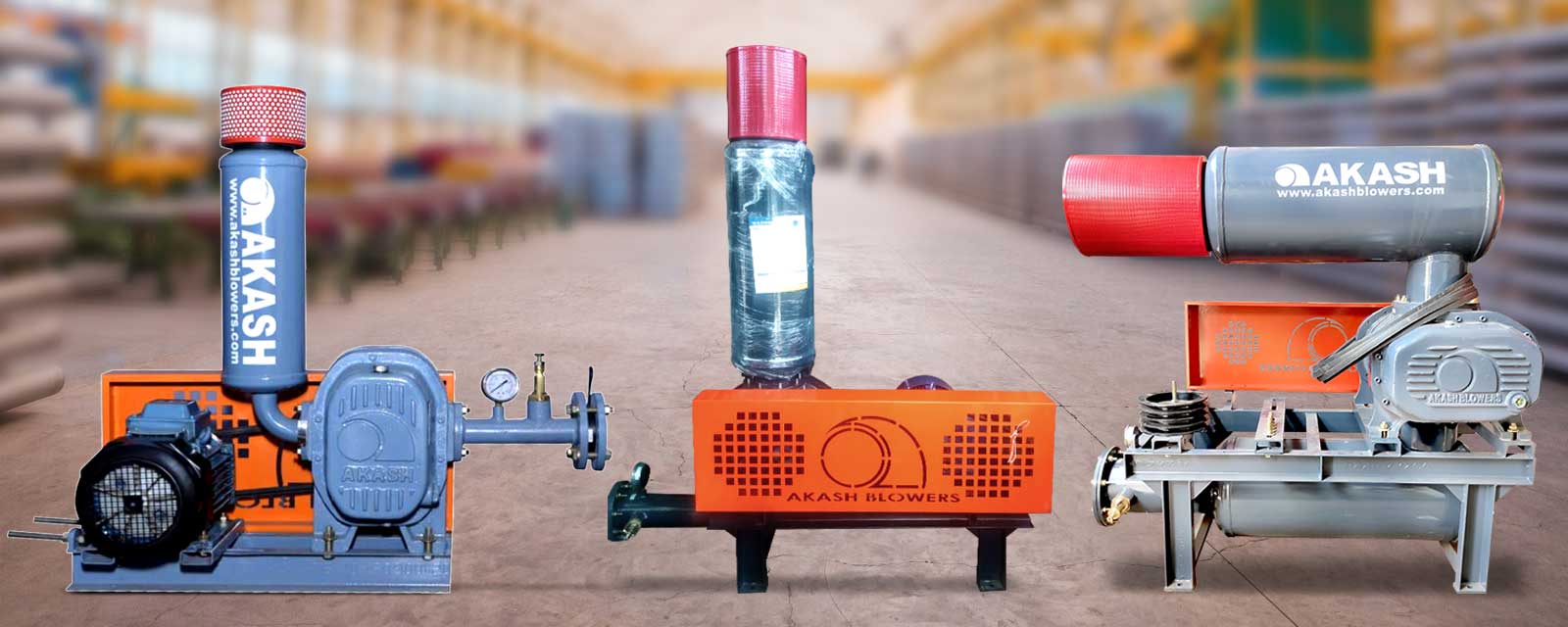
Conclusion
A lobe blower is a positive displacement air-moving machine designed around accurately synchronized rotating lobes. Its applications can range from wastewater aeration and process air to other industrial systems requiring continuous oil-free air delivery.
The most important considerations include rotor configuration, airflow and pressure requirements, cooling arrangement, installation orientation, manufacturing accuracy, timing gear construction, bearing design, rotor balancing, and performance testing.
Whether the requirement is for a roots rotary lobe blower, twin lobe blower, tri lobe blower, or another rotary lobe configuration, the correct selection should always begin with the process requirements. Accurate engineering and manufacturing are essential for achieving the intended volumetric efficiency and operating performance.
Lobe Blower Solutions from Akash Blowers
Akash Blowers manufactures engineered blower systems using close-tolerance machining and state-of-the-art imported CNC machines. Its blower designs provide 100% oil-free air delivery and are factory engineered and factory guaranteed.
The equipment incorporates alloy steel hardened and ground timing gears with oil-splash lubrication, anti-friction bearings, rigid one-piece CI casing and end plates, and dynamically balanced rotor shaft assemblies to Grade 6.3 according to ISO 1940-1986.
Horizontal and vertical configurations, along with air-cooled and water-cooled designs, are available. Large inlet and outlet connections are designed to minimize losses, while accurate profile machining supports improved volumetric efficiency. Performance testing is carried out according to STP-01 based on BS 1571-2:1975 and ISO 1217:2009.
For applications requiring a properly engineered lobe blower, users can evaluate the required configuration, operating conditions, and air delivery requirements with Akash Blowers to identify a suitable blower solution.
Frequaently Asked Question
A lobe blower is a positive displacement air-moving machine that uses rotating lobes to move a consistent volume of air or gas from the inlet to the outlet. It is commonly used for continuous air supply and industrial process applications.
A lobe blower works by rotating two synchronized rotors inside a casing. Air is trapped between the rotors and casing and carried from the inlet toward the discharge outlet. Timing gears maintain the correct rotor position during operation.
A roots rotary lobe blower is a positive displacement blower based on rotary lobe technology. It uses rotating lobes to move air continuously and can be designed for applications requiring oil-free air delivery.
A twin lobe blower uses rotors with two lobes, while a tri lobe blower uses rotors with three lobes. The appropriate configuration depends on the application’s airflow, pressure, operating, and installation requirements.
Yes. A properly designed lobe blower can provide 100% oil-free air delivery, making it suitable for processes where oil contamination in the delivered air needs to be avoided.
A lobe blower can be used in wastewater treatment, sewage treatment, aeration systems, industrial air supply, pneumatic conveying, process air applications, and other systems requiring continuous air movement.
Important features can include hardened and ground alloy steel timing gears, anti-friction bearings, rigid CI casing and end plates, dynamically balanced rotor shafts, large inlet and outlet connections, and accurately machined rotor profiles.
Yes. Depending on the equipment design and installation requirements, a lobe blower can be available in both horizontal and vertical configurations.
Lobe blower systems can be designed with air-cooled or water-cooled arrangements. The appropriate cooling configuration depends on the operating conditions and equipment requirements.
Timing gears maintain the correct relationship between the rotating lobes. Accurate timing helps prevent rotor contact and supports proper operation of the lobe blower.
Dynamic balancing helps reduce unwanted vibration from the rotating assembly. The specified rotor shaft assembly can be dynamically balanced to Grade 6.3 according to ISO 1940-1986.
State-of-the-art CNC machines can machine blower components to close tolerances and achieve accurate rotor profiles. This precision can contribute to improved volumetric efficiency in a lobe blower.
Large inlet and outlet connections can help minimize flow losses at the blower connections. This supports efficient movement of air through the connected system.
When selecting a lobe blower, consider the required airflow, operating pressure, cooling arrangement, installation orientation, air-quality requirements, rotor configuration, manufacturing accuracy, and application conditions.
Yes. A lobe blower can be used for wastewater and sewage treatment applications where continuous air supply is required, particularly for aeration-related processes.
Volumetric efficiency indicates how effectively the blower moves air relative to its designed displacement. Accurate rotor profile machining and close manufacturing tolerances can support improved volumetric efficiency.
The supplied blower design is performance tested according to standard test procedure STP-01, based on BS 1571-2:1975 and ISO 1217:2009.
A roots lobe blower is a positive displacement blower using rotating lobes to transfer air or gas. It is commonly associated with Roots-type rotary positive displacement blower technology.
The supplied blower design has interchangeable major components. Interchangeability can be useful for maintenance and component replacement, subject to the manufacturer’s specifications and procedures.
Akash Blowers provides factory-engineered lobe blower solutions featuring oil-free air delivery, accurately machined components, multiple configuration options, and performance testing based on established standards.
What Our Clients Say About Us

RATHOD VIJAY
4 months ago
- List Item #1
- List Item #1
- List Item #1
- List Item #1
- List Item #1
Verified Purchase
Akash Blowers service always excellent, deliveries always on time, staff highly technical and cooperative. Industrial Roots Blower performance great.

Jayesh Pangam
3 months ago
- List Item #1
- List Item #1
- List Item #1
- List Item #1
- List Item #1
Verified Purchase
Product quality very good and after-sales support also reliable. With 100% spare parts available, their Ring Blowers service makes the team more dependable.

Arvind Raut
3 months ago
- List Item #1
- List Item #1
- List Item #1
- List Item #1
- List Item #1
Verified Purchase
Akash Blowers Pvt Ltd makes quality Air Blowers; with 5 years of support their service stays prompt and cost-effective. Roots Blower performance always reliable.

Akshara m
4 months ago
- List Item #1
- List Item #1
- List Item #1
- List Item #1
- List Item #1
Verified Purchase
Best and timely service providers offering quick support and smooth coordination, delivering dependable Water Treatment Blower solutions for every requirement.
Aparna S
3 months ago
- List Item #1
- List Item #1
- List Item #1
- List Item #1
- List Item #1
Verified Purchase
Good staff service, quick quotes, and efficient Roots Blower performance. Client fully satisfied and issues resolved instantly. Well done Akash Blowers.

Anuj Sharma
3 months ago
- List Item #1
- List Item #1
- List Item #1
- List Item #1
- List Item #1
Verified Purchase
Good experience with Akash Products. Best service, on-time delivery and friendly staff. A trusted choice for Twin Lobe Roots Blower users.

Himmat Singh
Month ago
- List Item #1
- List Item #1
- List Item #1
- List Item #1
- List Item #1
Verified Purchase
Product quality very good, sales and service staff helpful, spare parts easy to get, and their Ring Blower support remains reliable and smooth.

Amit Yadav Yadav
3 years ago
- List Item #1
- List Item #1
- List Item #1
- List Item #1
- List Item #1
Verified Purchase
We’re associated for 5 years; models like AB-305, AB-44, AB-52 work great. Support is reliable, especially in Industrial Roots Blower solutions.

Divyanshu pandey
2 months ago
- List Item #1
- List Item #1
- List Item #1
- List Item #1
- List Item #1
Verified Purchase
I like all the work of this company. Very best 👍🏻 Best quality material and reliable Air Blower and Roots Blower products.

UNISTAR AQUATECH
2 months ago
- List Item #1
- List Item #1
- List Item #1
- List Item #1
- List Item #1
Verified Purchase
Very good experience with Akash Blower Company. Supportive team and quick response. Trusted for Water Treatment Blower solutions.

Dhanashree Jadhav
3 months ago
- List Item #1
- List Item #1
- List Item #1
- List Item #1
- List Item #1
Verified Purchase
Very nice service provided by Akash Blowers team. Reliable support for Ring Blower and other Industrial Roots Blower needs.

Pardeep Kumar
3 years ago
- List Item #1
- List Item #1
- List Item #1
- List Item #1
- List Item #1
Verified Purchase
Such a wonderful company to buy Ring Blower. Purchased 1 year ago, still works perfectly. Fully satisfied with Roots Blower support.

Sumeet bansal
2 months ago
- List Item #1
- List Item #1
- List Item #1
- List Item #1
- List Item #1
Verified Purchase
Their products and service are very good. Trusted for high-quality Air Blower and reliable Twin Lobe Roots Blower solutions.

Ewaltz works
9 months ago
- List Item #1
- List Item #1
- List Item #1
- List Item #1
- List Item #1
Verified Purchase
Akesh Blowers provides best on-time service and delivery. Technical, cooperative staff. Ideal for Roots Air Blower, Screw Press, and spares.

Saumyaranjan Nayak
10 months ago
- List Item #1
- List Item #1
- List Item #1
- List Item #1
- List Item #1
Verified Purchase
Best on-time service and delivery within 24–48 hours. Friendly, cooperative staff. Ideal for Roots Blower and Industrial Air Blower needs.

Account Amitaqua
3 months ago
- List Item #1
- List Item #1
- List Item #1
- List Item #1
- List Item #1
Verified Purchase
Good experience with Akash Products; their service is reliable, and both Air Blower and Roots Blower solutions deliver consistent high quality.

Mohit Kumar
2 months ago
- List Item #1
- List Item #1
- List Item #1
- List Item #1
- List Item #1
Verified Purchase
Good product and excellent service. Trusted for reliable Air Blower and high-quality Twin Lobe Roots Blower solutions.

Kishan Bhagat
11 months ago
- List Item #1
- List Item #1
- List Item #1
- List Item #1
- List Item #1
Verified Purchase
Company bahut achi hai. Staff bhi bahut acha hai. 3 saal se koi problem nahi hui. First-class service for Ring Blower & Roots Blower.

Harsh Sharma
10 months ago
- List Item #1
- List Item #1
- List Item #1
- List Item #1
- List Item #1
Verified Purchase
Good company nd quality of blowers so good nd service bhi too good. Ring Blower and Air Blower products are very reliable.

Sudhish Kumar
10 months ago
- List Item #1
- List Item #1
- List Item #1
- List Item #1
- List Item #1
Verified Purchase
Good experience with Akash Products. Nice design, excellent output as per requirement. Trusted for Roots Blower & Air Blower.
Review Us on Google
Take a moment to review us on Google and let us know how we’re doing. Your feedback helps us improve and continue delivering the best solutions.
Click Herelobe blower, roots rotary lobe blower, rotary lobe blower, tri lobe blower, twin lobe blower, roots lobe blower
lobe blower, roots rotary lobe blower, rotary lobe blower, tri lobe blower, twin lobe blower, roots lobe blower
lobe blower, roots rotary lobe blower, rotary lobe blower, tri lobe blower, twin lobe blower, roots lobe blower